26 November 2026
Choosing a Barcelona City Tour in Ciutat Vella
Presented by @thebarcelonacitytourdaily
A barcelona city tour can be shaped around a short first visit, a deep dive into old streets, or a day that links major landmarks with quieter corners. The right choice depends less on the name of the tour and more on how you want to move, what you want to understand, and how much time you have between stops. Start with the practical basics, then narrow the choice by route, pace and commentary.
Set your purpose before comparing options
Decide what you want from the day. Some visitors want a broad introduction: a few famous sights, a clear sense of the city layout, and enough context to feel oriented. Others want a themed route built around architecture, food, history, or neighbourhood life. A general overview suits a first morning in the city, while a focused route works better if you already know the main landmarks and want more detail.
Think about who is coming too. A group with children may need shorter walking blocks and more pauses. A pair who enjoy architecture may prefer slower time at each building. If you are arriving after a long journey, a route with limited walking may be more useful than a dense route that promises many stops. The best barcelona city tour is the one that fits the energy of the people taking it, not the one with the longest list of attractions.
Location also matters. Ciutat Vella is the old heart of the city, with narrow streets, busy squares and layers of history close together. A tour that starts near this area can be convenient if your accommodation is central, but you still need to check where it begins and ends. A starting point near a metro station can save time, especially if you are coming from another part of Barcelona.
Choose the format that suits your pace
City tours come in several formats, and each one changes the feel of the day. Walking tours are good for street detail, atmosphere and short distances between nearby sights. They require comfort on paving stones and the ability to keep up with a group. Bus based formats reduce walking between landmarks and can help when the route crosses a wider area. A hop-on hop-off bus can be useful for flexible sightseeing, though waiting time and traffic can affect the pace.
Small group tours tend to feel more personal, while larger groups can be easier to join at short notice. Private formats allow the route and timing to be shaped around specific interests, but they require more planning. When comparing formats, look at the total time, not only the headline duration. A route that includes entry to a landmark, queue time, breaks and transfers may take longer than expected.
Weather is a practical factor. Barcelona can be warm and bright, but shade is not always easy to find in open squares. A morning route often feels more comfortable in warmer months. In cooler or wetter periods, an indoor focused route may be easier to enjoy. Whatever the season, comfortable shoes and water are sensible for walks through the old centre.
If you want to check a local option while planning, search for the Sagrada Familia & Barcelona City Tour official site alongside other options, then compare the route, timing and meeting point in the same way you would for any other provider. One local option is Sagrada Familia & Barcelona City Tour.
Compare the route in detail
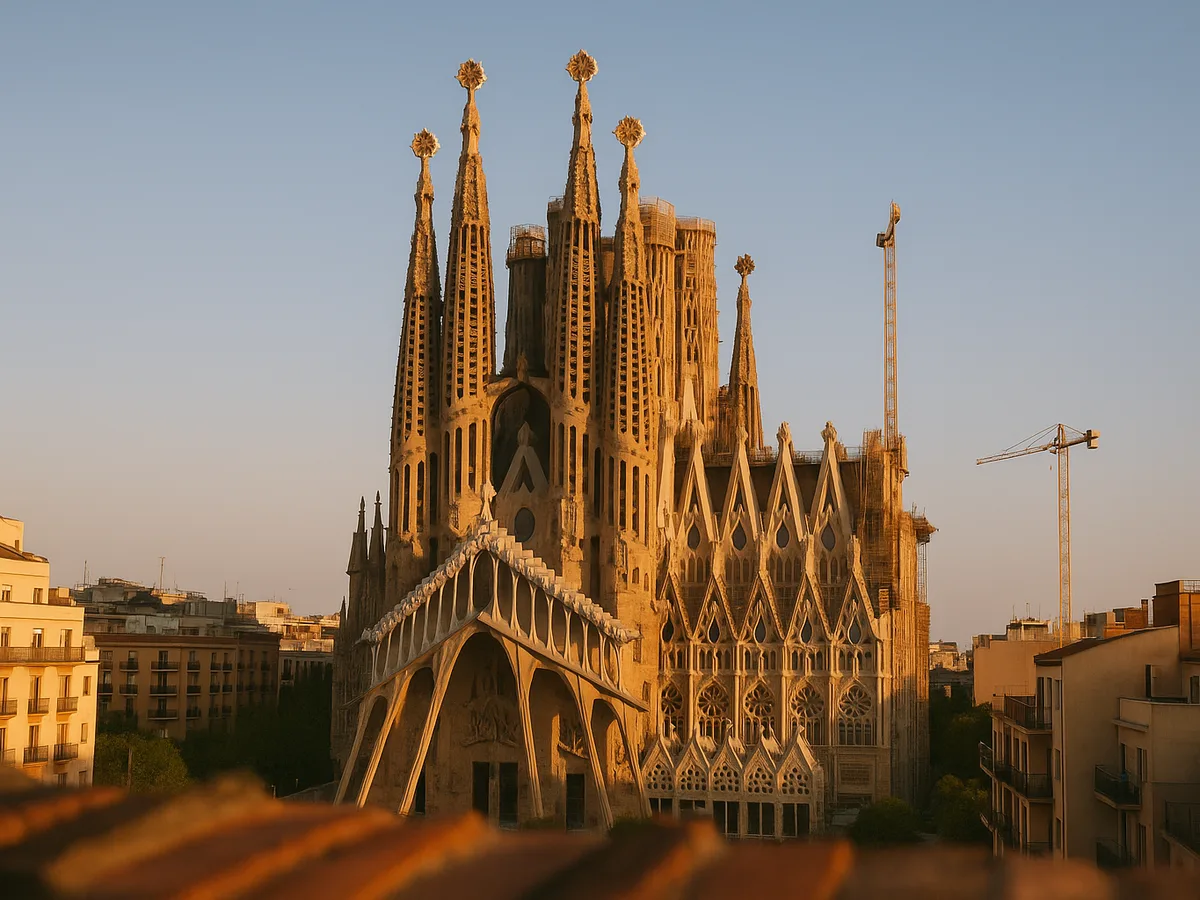
Read the route as a sequence, not as a list of names. A good itinerary explains how much time is spent at each stop and whether entry is included or viewed from outside. For example, a route may mention Sagrada Familia, but that can mean a short exterior stop or a timed interior visit. Those are very different experiences. The same applies to Park Güell, where location, entry rules and walking gradients can affect the day.
In Ciutat Vella, landmarks sit close together, but the streets can be crowded. A route through the Gothic Quarter may be rich in detail, yet it can feel slow when passages are busy. A walk near Barcelona Cathedral works well if you want architecture and old streets in a compact area. Las Ramblas is easy to recognize, though its pace and crowds may not suit everyone. La Boqueria Market can add a food angle, but a brief pass through a market is different from a tasting stop.
For a broader view, some routes include Montjuïc Castle or viewpoints across the city. These add variety, but they also add transfers and time. Ask whether the route uses public transport, a coach, or walking between points. If a day has several hills or long gaps, the tour may be less relaxed than it appears on paper.
Watch for routes that overpromise. A long list of sights can sound appealing, but too many stops often leave little time to look closely. Fewer stops with clear context usually create a better memory than a rushed circuit. If a particular landmark matters most to you, make sure it is given real time in the plan.
Check the guide, language and group size
The guide shapes the experience as much as the route. Look for a clear description of the language used and whether the commentary is live or recorded. Live commentary allows questions and adapts to the group. Recorded audio can be consistent, but it may feel less responsive. If you are learning about a city for the first time, a guide who connects landmarks to wider history is often more valuable than one who simply recites dates.
Group size changes how easy it is to hear, ask questions and move through narrow streets. Smaller groups can pause quickly and avoid long roll calls. Larger groups may be more affordable and easier to find, but they can move more slowly. If you are sensitive to noise or need clear sightlines, check whether headsets are used and whether they are included.
Accessibility should be checked honestly. Old streets, steps, uneven paving and crowded entrances can create barriers, even when a route looks short on a map. If anyone in the group has limited mobility, confirm the walking distance, surface conditions, resting points and whether transport is step free. Do not assume that a bus based route removes all walking, as stops may still require pavement changes or short climbs.
Read the timing and meeting details carefully
Once a route fits your interests, examine the schedule. Note the start time, the end time and the end point. A tour that finishes across town may require extra travel before lunch or another activity. If you have a fixed afternoon plan, leave a buffer rather than building a tight connection.
Check what happens if you arrive late or need to leave early. Some routes can only join at the start, while others may allow entry at selected stops. This detail is useful for flexible sightseeing and for anyone using a hop-on hop-off bus. Confirm the rules with whichever business you choose, since timing policies vary.
Meeting details deserve the same attention. A square can have several entrances, and a busy street corner can be confusing when a group is waiting. Choose a meeting point that is easy to identify and close to public transport where possible. If the tour starts in Ciutat Vella, allow extra time for crowded streets and slow crossings near popular sites.
Know what is included and what is not
Before booking, separate the itinerary from the inclusions. Entry tickets, transport, food, drinks and headsets may or may not be part of the price. If a landmark stop matters to you, check whether entry is included, whether a ticket must be arranged separately, and whether timed entry affects the order of the day. These details can change both cost and timing.
Cancellation rules and changes are also worth reading. Plans shift, especially during travel, and a flexible booking can reduce stress. Check how far ahead changes are allowed and what happens if the route is altered due to weather, closures or local events. It is sensible to confirm current hours, appointment needs, charges and coverage with whichever business you choose, because these facts can change and should not be guessed.
Reviews can help with patterns, but read them with care. Comments about pace, clarity and group size are often more useful than simple praise. Several remarks about a rushed stop or a confusing meeting point can tell you what to expect. One unhappy review may reflect a single day, while repeated comments usually point to a consistent feature.
When you are ready to narrow the field, look up the Sagrada Familia & Barcelona City Tour official site together with a few alternatives and compare them against your own priorities: route, pace, language, group size, inclusions and meeting point. That comparison keeps the decision practical and avoids choosing a tour only because its title sounds impressive.
Make the final choice with a simple test
Shortlist two or three options, then ask the same questions of each. Does the route cover the places you care about with enough time? Does the pace suit the group? Are the start and end points easy to reach? Are the inclusions clear? Can the timing fit around meals, rest and other plans? If one option answers these questions cleanly, it is likely the better fit.
For a first visit, a balanced route through the old centre with one or two major landmarks often works well. For a repeat visit, a narrower theme may feel fresher. In Ciutat Vella, where history is dense and streets are lively, leaving room to wander can be as valuable as following a set plan. The right barcelona city tour should give you a strong framework, then leave enough space for the city to make its own impression.
Sagrada Familia & Barcelona City Tour is located at Plaça de la Rosa dels Vents, 1, Ciutat Vella, 08039 Barcelona, Spain, and can be contacted by phone at +34 632 93 79 41.